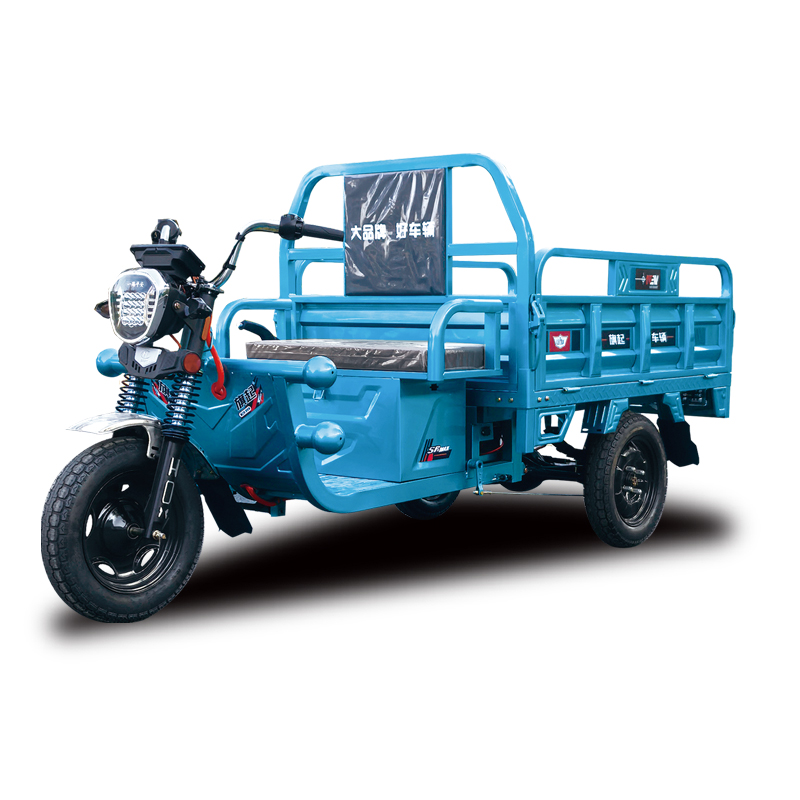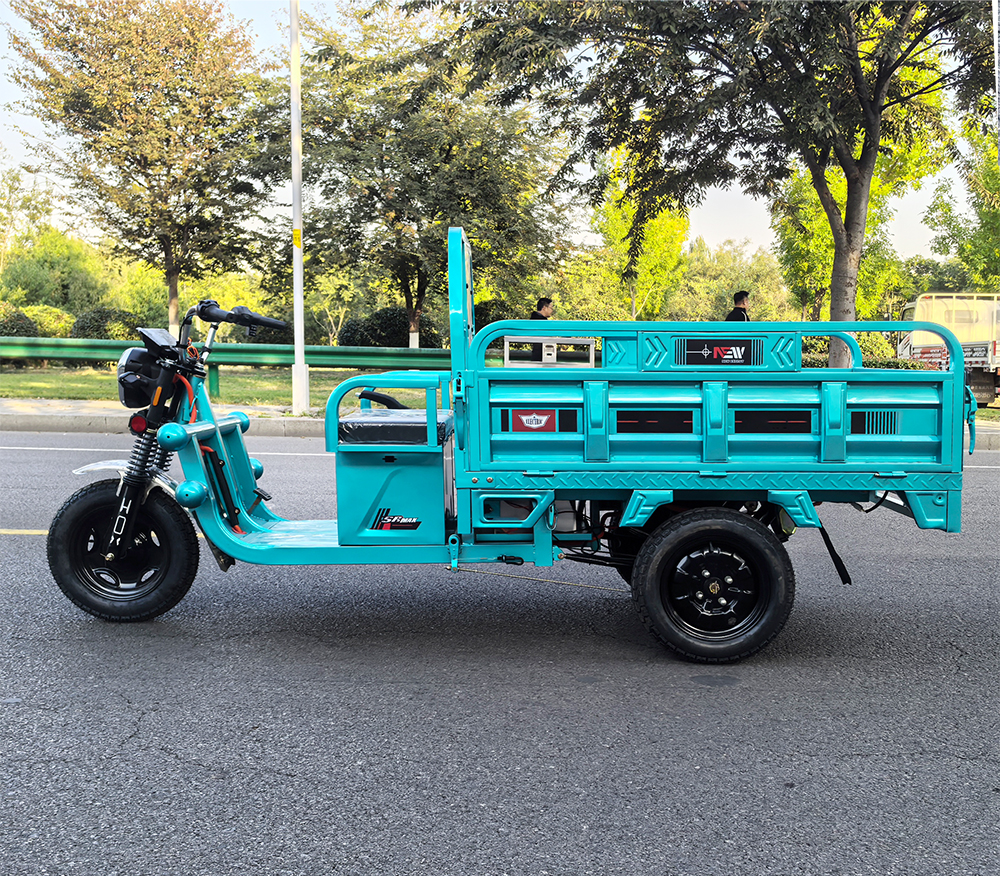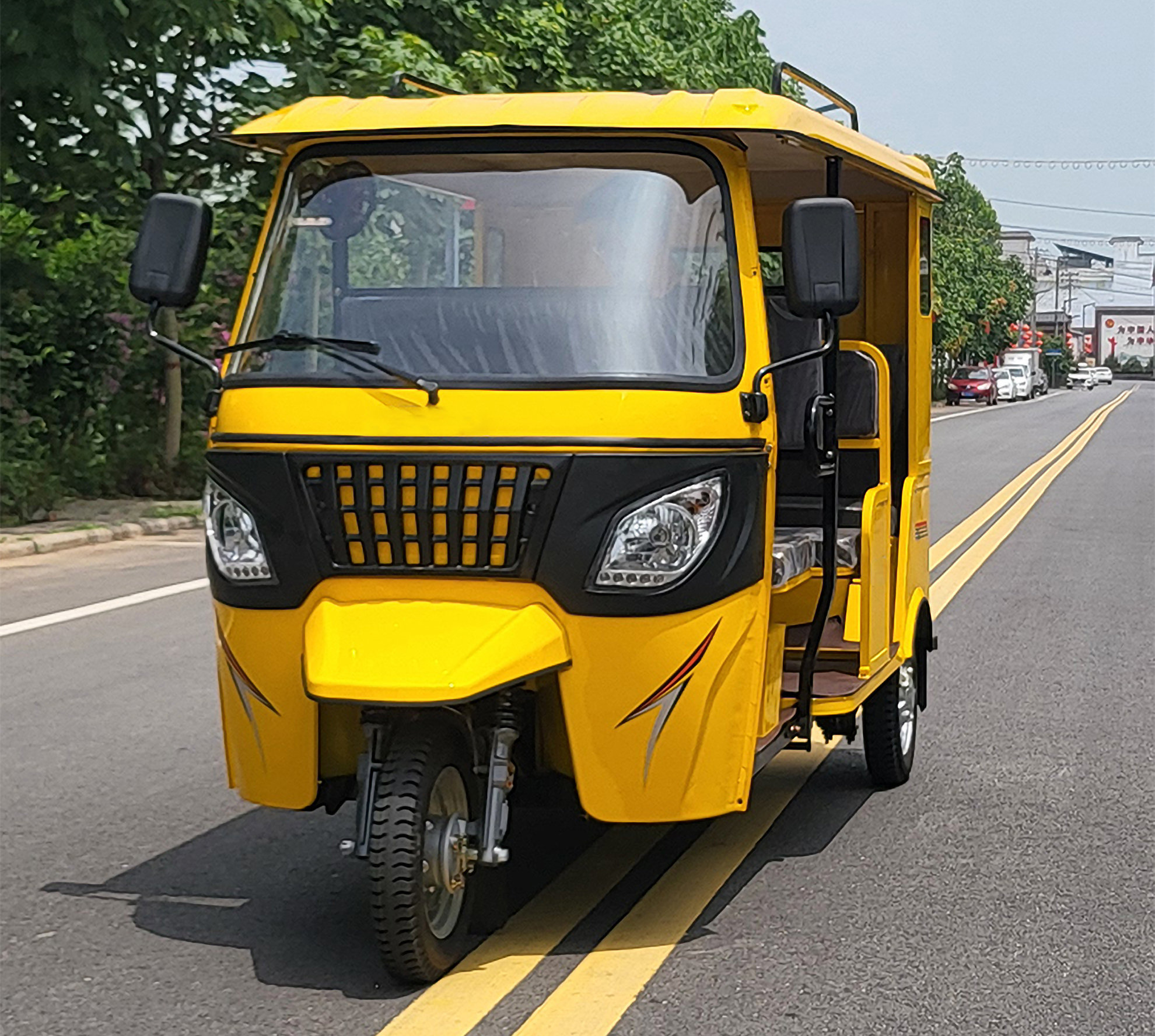
When customers search for electric cargo tricycles for mountainous cities or rural roads, one of the most common questions is simple: how much motor power is enough?
If you choose a motor that is too small, the vehicle will struggle on steep slopes. If you choose one that is too large, the cost increases and battery consumption rises. So finding the right balance is critical — especially for distributors and fleet buyers in hilly markets across South America, Southeast Asia, and parts of the United States.
In this article, we’ll break down how to select the right motor power for electric cargo tricycles in hilly areas, based on load capacity, slope angle, controller configuration, and battery system.
Electric cargo tricycles typically come with the following motor options:
| Motor Power | Typical Use | Suitable Terrain |
|---|---|---|
| 800W | Light cargo | Flat roads |
| 1000W | Medium cargo | Mild slopes |
| 1500W | Heavy cargo | Moderate hills |
| 2000W+ | Full load cargo | Steep & continuous hills |
For hilly areas, 1000W is usually the minimum starting point, but it may not be enough under full load conditions.
Generally speaking:
1000W → Handles 8–10° slopes with medium load
1500W → Handles 10–15° slopes with heavy load
2000W+ → Handles 15°+ continuous climbing
However, motor wattage alone is not everything. Torque output and controller performance also matters a lot.
Many buyers focus only on wattage, but what really determines climbing ability is torque.
For example:
A 1500W motor with high torque winding performs better than a low-torque 2000W motor.
Gear ratio and rear axle design directly influence climbing force.
In hilly regions, electric cargo tricycles should be equipped with:
High-torque brushless motor
Reinforced rear axle
18-tube or 24-tube controller
Strong differential system
Without proper torque configuration, even a powerful motor can feel weak during uphill starts. This is especially true when fully loaded.
Let’s break it down practically.
If your electric cargo tricycle is carrying:
500 kg on flat roads → 1000W may be enough
800 kg on 10° slope → 1500W recommended
1000 kg on 15° slope → 2000W strongly recommended
Actually, many users underestimate how much power is needed when starting on a slope. Starting torque demand is significantly higher than constant-speed climbing.
So yes, technically a 1000W motor can climb hills — but it will consume more current, heat faster, and reduce motor lifespan.
Motor power and battery configuration must be matched correctly.
For example:
1000W → 60V 45Ah lead-acid or lithium battery
1500W → 72V 45Ah+ recommended
2000W → 72V 60Ah or lithium system
If battery voltage is too low, the motor will not deliver full performance. In fact, many performance complaints are caused by weak battery systems rather than motor defects.
And here’s something many buyers overlook — higher voltage systems reduce current load, which helps reduce heat and improve climbing stability.
In mountainous villages:
Frequent stop-and-go
Steep narrow roads
Heavy agricultural cargo
👉 1500W–2000W is ideal.
For cities with moderate inclines:
Food delivery
Construction materials
Small business transport
👉 1000W–1500W works well depending on load.
Heavy cement, bricks, tools:
Continuous climbing under full load
👉 2000W+ is recommended for durability.
Choosing lower power just to save cost may result in higher maintenance expenses later. And nobody want that.
Not necessarily.
Higher motor power means:
Higher cost
Higher battery consumption
Higher controller requirements
If your target market has mild slopes only, 1500W is often the sweet spot between cost and performance.
For distributors building product lines, offering:
1000W (economic version)
1500W (standard hill version)
2000W (heavy-duty version)
… allows you to cover multiple market segments effectively.
For electric cargo tricycles operating in hilly areas:
Minimum recommended: 1000W (light load only)
Best balance option: 1500W
Heavy-duty climbing: 2000W+
And remember — motor power, torque design, controller, battery voltage, and axle structure must be considered as a complete system.
If you are sourcing from a professional electric cargo tricycle manufacturer, make sure they can customize motor configuration according to slope angle and load requirement, not just sell standard models.