When people first consider buying an electric cargo tricycle, one of the most common questions is very simple:
Is the pulling power actually strong enough for real work?
On paper, motor power numbers look impressive. But for home users, small farms, and family businesses, what really matters is whether the tricycle can handle real loads on real roads, day after day.
In previous blogs, we talked about battery range, charging time, and lithium vs lead-acid batteries. However, pulling power is what connects all of those factors to real-life usability. So let’s break this down in a practical way.
Pulling power is not just about motor wattage. In daily use, it is affected by:
Motor torque
Gear ratio
Battery output stability
Vehicle weight and load distribution
For example, a 1000W motor with good torque and a lithium battery can feel stronger than a 1500W motor powered by an old lead-acid battery. This is why two electric cargo tricycles with similar specs can perform very differently.
In simple terms, pulling power determines:
How easily the tricycle starts with a full load
Whether it can climb slopes
How stable it feels at low speed
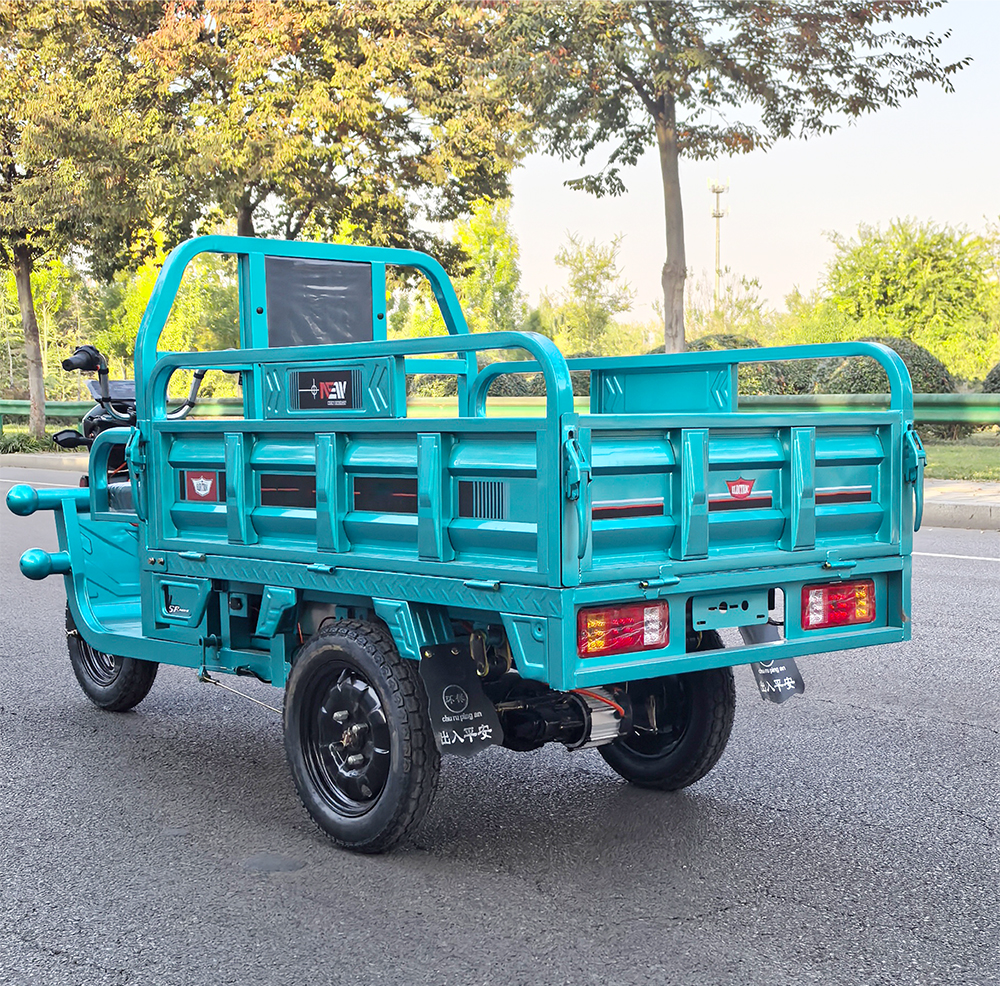
Most electric cargo tricycles designed for home or small business use can handle:
300–800 kg payload depending on model
Light trailers on flat roads
Daily stop-and-go transport
Under normal conditions, carrying farm produce, building materials, or household goods is not a problem. But the experience changes depending on the road condition and battery type.
As mentioned in our previous battery comparison blog, lithium batteries provide more stable voltage under load, which directly improves pulling performance. Lead-acid batteries, on the other hand, may feel weaker when the battery level drops.
Here are six real-life situations where pulling power is more than enough for daily needs.
Moving fertilizer, animal feed, tools, or harvested crops around a small farm is one of the most common uses. An electric cargo tricycle handles short-distance heavy loads easily, especially on rural roads.
Transporting cement bags, bricks, tiles, or wood is where pulling power becomes obvious. Instead of multiple trips with small vehicles, one loaded trip saves time and effort.
For families selling vegetables, fruits, or handmade goods, electric cargo tricycles offer enough pulling force for daily market trips. And let’s be honest, this kind of daily routine can get tiring if the vehicle struggles under load.
Moving recyclable materials or bulky household waste is another practical use case. The low-speed control and stable pulling power make loading and unloading safer.
Transporting spare parts, tools, and finished products between home and a nearby workshop becomes much easier with a cargo tricycle. The low operating cost also helps small businesses stay profitable.
Helping neighbors move furniture or supplies might sound casual, but this is where electric cargo tricycles become part of daily life. It sound simple, but these small tasks add up.
Fuel cargo tricycles still have strong pulling power, especially for long-distance or continuous heavy hauling. But electric cargo tricycles perform surprisingly well for:
Short to medium distances
Urban and rural mixed roads
Frequent stops
Fuel vehicles maintain constant power, while electric vehicles deliver strong torque at low speed. For daily home use, electric pulling power often feels more practical than expected.
Pulling performance changes based on:
Flat roads vs slopes
Paved vs muddy roads
Load balance inside the cargo box
Even a powerful electric tricycle can feel weak if the load is poorly distributed. Proper loading improves both safety and performance.
This connects back to our earlier discussions about driving habits and battery efficiency: smooth driving and correct loading help maintain pulling power and range at the same time.
For most family users and small farms, the answer is yes. Modern electric cargo tricycles provide enough pulling force for daily logistics, light construction, and local transport.
The key is choosing:
The right motor configuration
The right battery type
The right payload capacity
Once these match your actual needs, the vehicle becomes a reliable daily tool—not just a cheap transport solution.